


The Discipline of Curiosity: Reflections on The AIAI Summit Toronto
Introduction
Before attending the AIAI Summit in Toronto, I was given one piece of advice: approach it with curiosity first and let social pressure come second. That framing changed everything about how I experienced the day.
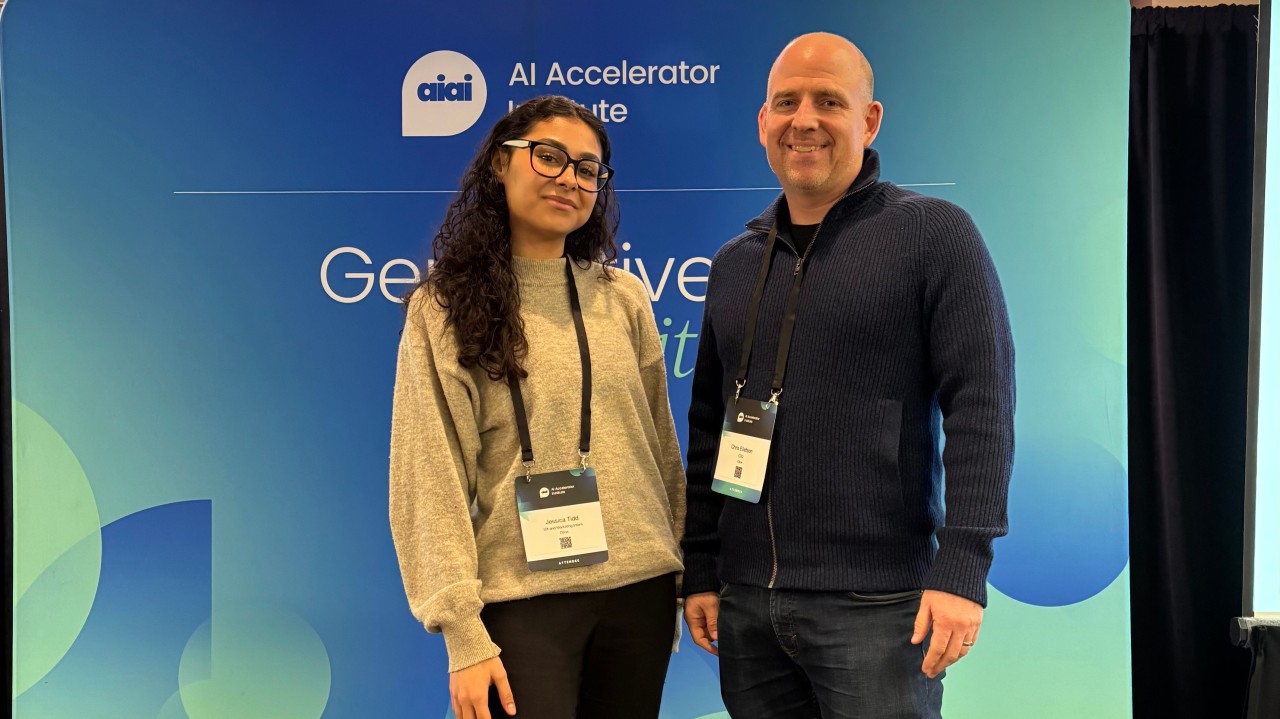
Attending the summit with our CTO, Chris Ellefson, I felt the familiar feeling of imposter syndrome. Still, that guidance shifted my mindset and allowed me to experience the day not only on Ollon's behalf but also for my own development.
That perspective shaped my central theme of the summit: curiosity. Curiosity helped me stay engaged even when I didn't fully understand what was being discussed. It gave me permission to ask questions instead of pretending I understood.
This idea came up repeatedly in conversations about AI adoption. No one has everything figured out, and even experts are learning as they go. It reminded me that staying curious matters more than having all the answers.
Just Listen
Curiosity has its complexities, and it can lead you in several directions at once. Over time, I have learned that conversation can be clarifying.
This became especially clear after speaking with attendees throughout the day. A conversation that stood out began casually as we compared our thoughts on the previous panels. The discussion unfolded naturally once I stopped trying to present a perfect explanation of who I am. He shared how he balances his passion for music with a career in technology, and I resonated with his experience because I am navigating a similar blend of creative and technical interests.
I asked him why he chose his field, how his path had evolved, and what he hoped to pursue next. At that moment, my job was just to listen.
His perspective reminded me of how curiosity can bridge seemingly unrelated interests, highlighting the value of diverse backgrounds in a field that depends on experimentation.
>mbracing being the least experienced person in the room
At this stage in my career, I recognize that I am still very inexperienced. Many of the discussions at the summit were outside my depth, and much of the terminology was unfamiliar to me. Surrounded by individuals with years of expertise, I felt out of place.
One moment that stood out was Lori Bieda's keynote on implementing and monetizing Generative and Agentic AI. She emphasized the gap between how people expect AI adoption to unfold and how it actually happens. The adoption cycle is full of chasms, and it becomes difficult to bring teams along when they do not understand or fear the technology. Curiosity is not only beneficial for individuals' learning but also essential for organizations moving forward.
What stood out even more was her communication style. She was clear and confident without being inaccessible, and she provided me with a concrete example of the kind of communicator I aspire to become.
Another session that challenged me was Alex Gatz's talk, "Break Your Agent Before Someone Else Does." Even though I did not fully understand the technical details, it was eye-opening to see how easily he could "break" production-level agents. It reminded me how important it is to understand the tools we are eager to adopt.
Being the least knowledgeable person in the room is only a limitation if you let it quiet your curiosity. In my case, it pushed me to learn more.
Learning From What You Don't Know
Being in UX and Marketing, not every topic at the summit aligned perfectly with my goals, yet each conversation taught me something valuable. Curiosity kept me open even when the content fell outside my immediate field.
For example, I was particularly engaged by Freeman Goja, MBA's talk, "Building Transparent, High-Performance Agentic AI for Real-Time Financial Decisions." He explained how multiple agents collaborate within a trading workflow, with each one handling a specific part of the decision-making process. He emphasized accountability through detailed logs that capture why the system made certain choices.
I do not work in finance, yet the structure he described was fascinating because it demonstrated how to mitigate risk in high-stakes environments. It also helped me think about how our team at Ollon can ensure accountability when handling sensitive information.
Curiosity allowed me to extract value from a topic far outside my domain. Every conversation moved me one step closer to figuring things out, even when the main takeaway was realizing what I'm not interested in. That's still progress.
Growth is not linear; there is more time than you think
Speaking with people I admire has shown me that success is rarely linear. Many didn't figure out what they were doing or accomplish their goals until later on in their careers.
Take Susan Campbell, our Director of Marketing and Strategic Partnerships at Ollon. She spent years working in and out of the restaurant industry, which eventually led her to a software solution for restaurants. That experience planted the seed for her in the tech world. She also worked as a massage therapist, helping people with their physical health. None of that time was wasted. She draws from each of those experiences daily, applying them to her work at Ollon and using them to build her own startup. Her path is a reminder that careers don't have to follow a straight line. Every experience teaches you something if you stay willing to learn.
Her path also reflects how careers look today. The question is no longer "what do I have to be?" but "what am I ready to try next?" That shift is rooted in curiosity, and it is becoming a defining part of how people enter and evolve in their careers. The question isn't about locking in a destination. It's about staying open to what comes next.
There is more time than we often realize, but spending too much of it overthinking plans is rarely productive. Every day is an opportunity, so the best way to move forward is to put yourself out there, be curious, and keep moving.
I am thankful to the AIAI team, including Jordan Dunne and Albert Chitiyo, for planning such a thoughtful event. I also want to thank Chris Ellefson, Susan Campbell, and Ollon for fostering a co-op environment that supports technical growth while also giving me the space to explore my career path with intention.